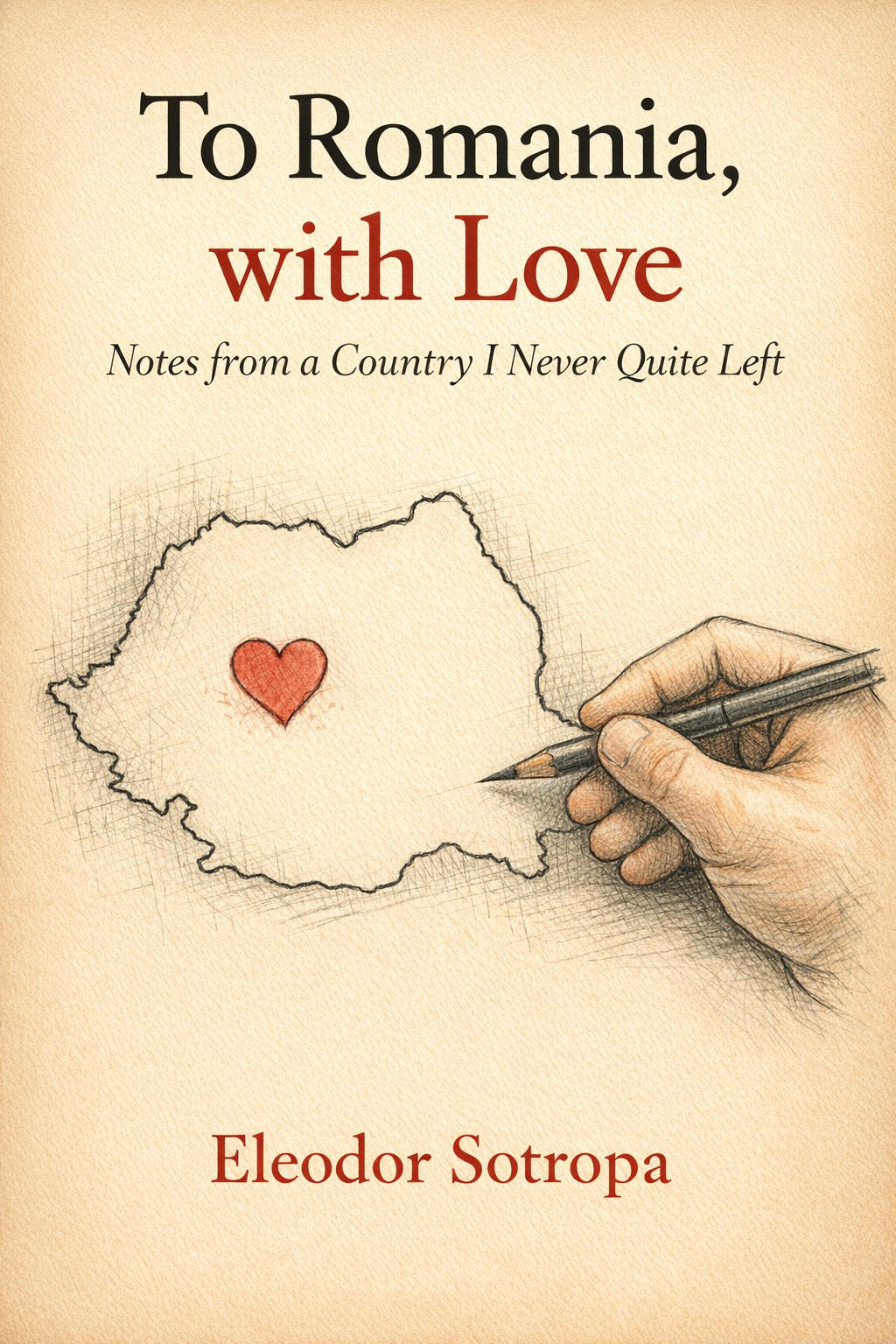
Eleodor Sotropa
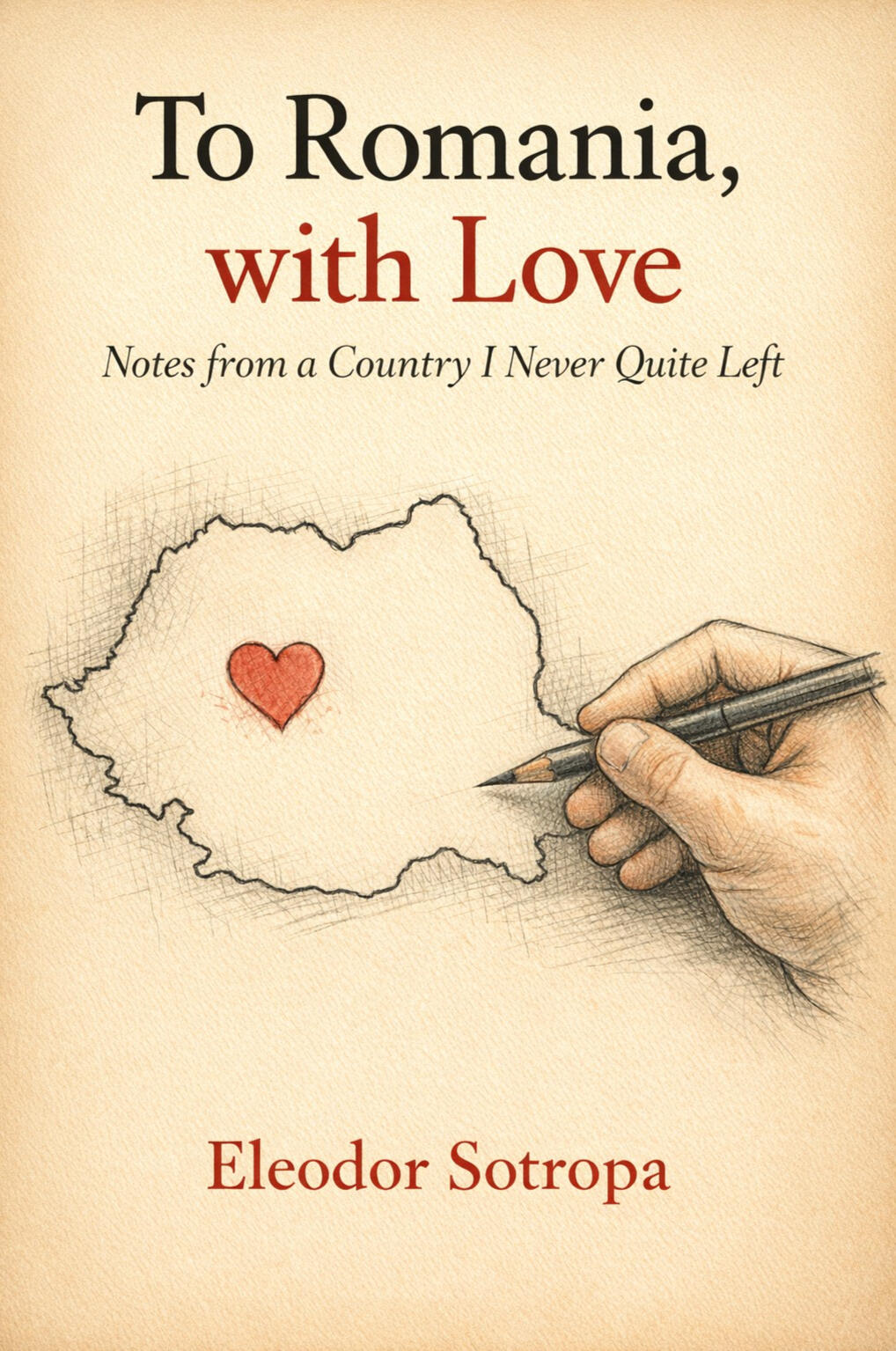
To Romania, With LoveNotes from a Country I Never Quite Left
This is a book of twenty notes. Not a guidebook. Not a history. Not a confession. Twenty patient, attentive chapters about a country that does not, in 2026, sit in heavy rotation on the world's literary map, and that rewards, perhaps for that reason, the visitor who is willing to slow down.
What You Will Learn From The Book
For three decades, the writer has been carrying Romania quietly in his pocket. The smell of warm bread at a Bucharest tram stop at seven in the morning. A wooden bowl from a village in Bucovina that has, by now, been home more often than he has. The brass on the eastern edge of Târgu Jiu when the late light catches the Endless Column at the angle Brâncuși meant. A bowl of ciorbă rădăuțeană in a kitchen in Suceava that tastes, on the right Sunday, like a country explaining itself one spoonful at a time.


You will walk Calea Victoriei in Bucharest, where the Belle Époque arcade still keeps its dignity beside the post-communist glass. You will stand inside the painted churches of Voroneț and Sucevița, where blue is not a colour but a position.
You will follow the Danube to its delta, the country's quiet eastern argument for itself. You will sit at Caru' cu bere, the building that stayed when nothing else did.
You will watch UiPath rise out of an ordinary apartment block in Floreasca, and Țiriac return a private collection to the city that raised him. You will meet Maramureș, where the wood remembers, and Sibiu, where the Saxons left and the rooflines stayed.
Chapters
To Romania, with Love is a book for readers who do not want explanations, rankings, or itineraries. It is for those who suspect that a country is best understood sideways, through food eaten standing up, buildings that refused to fall, businesses that grew quietly, and memories that survived borders. Written from the space between leaving and returning, this is a series of sharply observed notes on how Romania actually works when no one is presenting it. History here is not a backdrop. It is something you eat, walk past, inherit, and argue with. Read slowly. The country prefers it that way.
Chapter ListPreface – Why Notes Are Better Than ConclusionsThis book refuses to explain Romania. Instead, it listens. Written from the in-between position of someone who grew up here and left, then kept coming back, these chapters move through kitchens, churches, businesses, and borders to show how a country actually lives. The argument is not stated. It emerges. Pay attention, the book suggests, and Romania rewards you.Chapter 1 – Bucharest, Two Cities at OnceBucharest lives on two registers at the same address. Belle Époque façades and concrete megastructures, Schubert drifting from an open window and traffic grinding below. This chapter walks you through a capital built on flat land with no reason to be one, held together by habit, contradiction, and quiet endurance. Nothing resolves. Everything coexists.Chapter 2 – Mititei, the Public MeatFive mici and a beer is not a meal. It is a social contract. From village fairs to football stadiums, this chapter follows Romania’s most democratic dish from nineteenth-century improvisation to EU regulation. Uncased, smoky, eaten standing up, mici tells you more about Romanian public life than any monument ever could.Chapter 3 – Palatul ParlamentuluiApproached on foot, the Palace of Parliament does something strange to scale and memory. Built by force, finished by necessity, and maintained by habit, it is less a monument than a fact one must live with. This chapter refuses outrage and sentimentality alike, treating the largest building in Europe as inherited geology rather than ideology.Chapter 4 – Caru’ cu bere, the Building That StayedFor 125 years, this beer hall has never stopped serving lunch. Through monarchy, fascism, communism, and capitalism, the waistcoats stayed, the vaults held, and the tables filled. This chapter shows how buildings survive not by being preserved, but by being needed, one plate at a time.Chapter 5 – Brașov, the Bend in the MountainBrașov sits exactly where four mountain passes meet, and history keeps arriving by foot. Saxon walls, Orthodox churches, industrial collapse, and an uprising that shouted “bread, heat, liberty” all converge here. The mountain watches. The town remembers. Some things bend. Some endure.Chapter 6 – The Two Hours, and What People Watched AnywayIn the 1980s, Romania had two hours of television a day. The rest of the evening belonged to smuggled VHS tapes, whispered radio frequencies, and unofficial truth. From a single woman dubbing every Hollywood voice to an entire nation listening together in kitchens, this chapter shows how information leaked through cracks the state could not seal.Chapter 7 – Sibiu and the Saxon QuestionSibiu’s rooftops seem to watch you back. Built by a Saxon community that largely left, the town reinvented itself using habits of governance rather than nostalgia. Museums older than the Louvre, fortified villages without villagers, and a Saxon mayor turned president raise an uncomfortable question. Who inherits a place when its builders are gone?Chapter 8 – Dedeman, the Quietest EmpireRomania’s largest Romanian-owned retailer did not advertise, did not expand abroad, did not raise capital, and did not explain itself. It simply opened stores, paid well, and never ran out of cement. This chapter is about discipline, patience, and the power of being boring on purpose in a country that was never supposed to produce giants like this.Chapter 9 – Maramureș, Where the Wood RemembersIn Maramureș, the gate matters more than the house. Carved churches rise without nails. Tombstones joke with the dead. This chapter moves through wood that carries memory by hand, villages hollowed by migration but still named by ritual. Look closely and you will see how families sign their history in oak.Chapter 10 – Țiriac, the Capital That Came BackA hockey player became a tennis agent, then a banker, then a billionaire, then returned home. Țiriac is not a morality tale but a seam running through Romanian history, linking pre-1989 exception to post-1989 capital. This chapter holds success and ambiguity in the same frame and refuses to simplify either.Chapter 11 – Voroneț and the Painted NorthA blue wall stops you in your tracks. Painted in the sixteenth century and never fully decoded, Voroneț’s exterior fresco has outlasted empires and conservation theories alike. This chapter follows eight painted monasteries that tell theology, geopolitics, and local confidence on village walls, reminding you that Romania often hides its greatest works where you least expect them.Chapter 12 – Bucovina, a Way of ThinkingBucovina is not just a region. It is a mental discipline. Shaped by Habsburg administration, multilingual education, and loss repeated, it survives less as territory than as habit. Following family memory from imperial towns to communist apartments, this chapter shows how intellectual inheritance travels even when borders snap shut.Chapter 13 – Ciorbă Rădăuțeană, the 1979 SoupA soup invented in a provincial hotel becomes a national staple. Chicken, garlic, sour cream, restraint. This chapter traces how Romanian tradition is sometimes created deliberately, not inherited, and why that does not make it any less real. In a country used to improvisation, invention is just another form of continuity.Chapter 14 – Iași, the Other CapitalOnce the cultural heart of Romania, Iași still carries itself that way. Linden‑scented boulevards, literary feuds, and quiet persistence define a city that never quite surrendered relevance. This chapter listens closely to where Romania learned how to think before it learned how to govern.Chapter 15 – Luca Covrigi and the Morning CountryRomania wakes up at tram stops. Warm pretzels, no slogans, no mythology. Luca built a national bakery chain without pretending bread was anything other than bread. This chapter shows how small rituals glue a country together before politics ever gets involved.Chapter 16 – NATO, Twenty-Nine March 2004A ceremony lasting minutes reshaped an entire security horizon. This chapter stands inside the quiet gravity of accession, tracing how a country that spent decades hedging between powers finally chose one. The ink dried fast. The implications did not.Chapter 17 – Târgu Jiu, the Endless ColumnBrâncuși’s column rises without explaining itself. Built to remember the dead of a single war, it ended up measuring something larger. This chapter reads sculpture as infrastructure, abstraction as memory made vertical, and nationalism without shouting.Chapter 18 – UiPath, the Floreasca AnomalyFrom a Bucharest lake district to the New York Stock Exchange, UiPath rewrote what Romanian tech entrepreneurship looks like. This chapter places the company inside a broader pattern of quiet competence and improbable global reach, asking not how it happened, but why it happened here.Chapter 19 – One January 2007EU accession unlocked roads, borders, and departures. Millions left. Millions stayed. This chapter untangles gain and loss without tallying them, following people, trucks, and ballots across a Romania still deciding what membership really means.Chapter 20 – The Delta, the Country at Its EdgeWhere the Danube disappears into reeds and silence, Romania loosens its grip. The Delta is not an ending, but a different grammar of time. Birds, fishermen, and water do the talking here. This chapter closes the book by refusing closure.EpilogueThe country still has more chapters than this book can hold. These are not conclusions, only evidence. If you read slowly, Romania will not thank you. It will simply continue, and that may be the better reward.
What Did I Miss?A book is never finished. It simply stops at a certain moment. This page is how it continues.
To Romania, with Love was written as notes - from places, conversations, and memories that stayed.But a country is not a closed set.
It shifts depending on who is looking, and what they carry with them. If something felt missing to you…
there’s a good chance you’re right.
If your contribution shapes the second edition:You will be named in the acknowledgments. And in some cases, more directly: “This chapter exists because [Name] wrote in.”
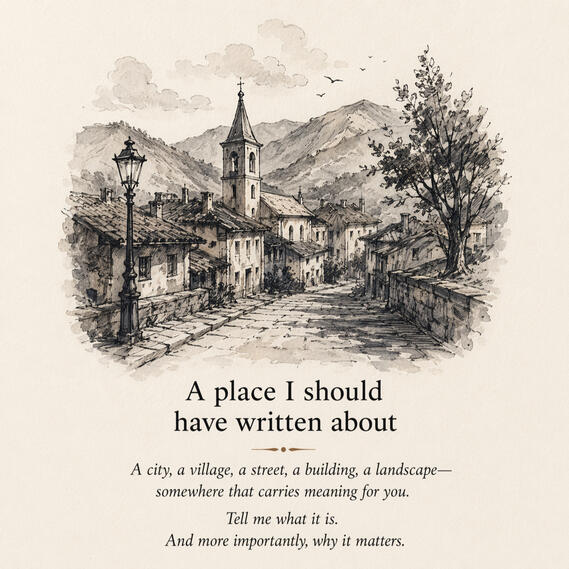
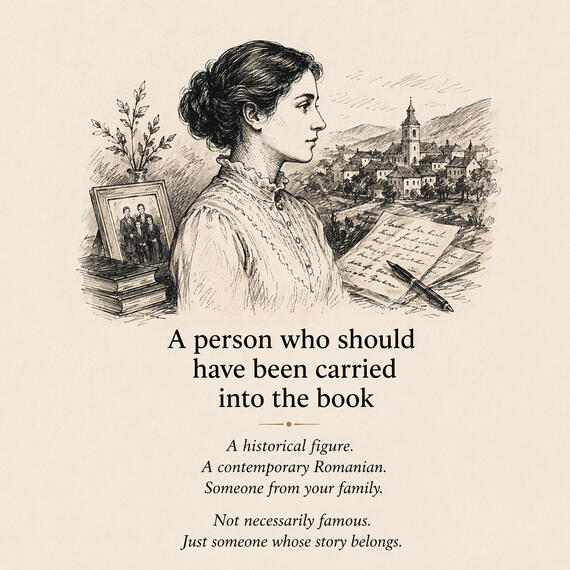
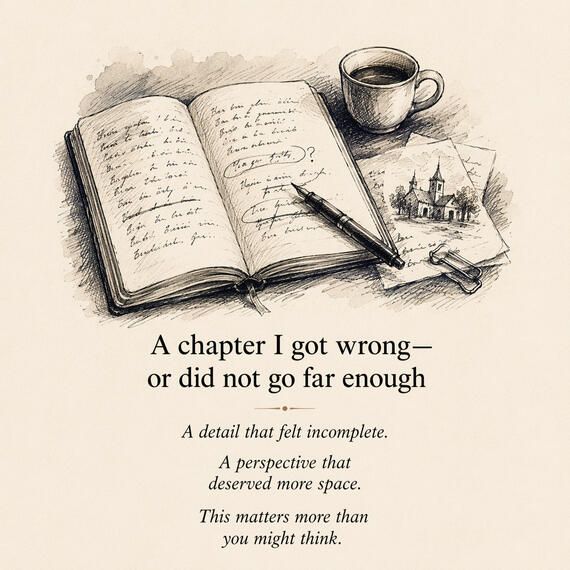
Most books are written once, published once, and left alone.
I’d rather do something slightly different. If the first edition was written from memory, the second might be written with memory. Yours included.
About The Author
Eleodor Sotropa grew up in Romania and has lived in North America for more than three decades, returning regularly to the country he never quite left.
By profession, he is a technology leader working at the intersection of global organizations, systems, and people, where he focuses on making complex systems legible and usable. By inclination, he is an observer of institutions, everyday rituals, and the long afterlife of history in ordinary places. To Romania, with Love is written from that in‑between position, close enough to remember and far enough to notice.
This book is dedicated to his parents and his sister, who taught him how to pay attention long before he learned the language of history, and whose lives anchored his sense of where he comes from.
It is also dedicated to the Romanian community in Cincinnati, who became family far from home, keeping memory alive through shared tables, shared stories, and the quiet understanding that belonging does not end at the border.